
Thermal report
The continuous temperature record of every monitored run.
| Sections | 24 |
| Peak | 122 °F / 50 °C |
| Location | Sec. 137 · 16 ft |
| Total alerts | 3 |

IHTC · Integrated Heat Tracking Cable
Know exactly where temperature is rising, and how fast. IHTC delivers continuous thermal monitoring with precise location for battery rooms, charging zones, conveyors, recycling and critical electrical systems.
Trend alerting
With IHTC
Without continuous monitoring
heat begins
caught as it rises
Sec 137 · 122 °F (50 °C)
inspected
resolved as scheduled maintenance
heat begins
grows unobserved
alarm threshold reached
fire alarm response · downtime · claim
Dual sensing
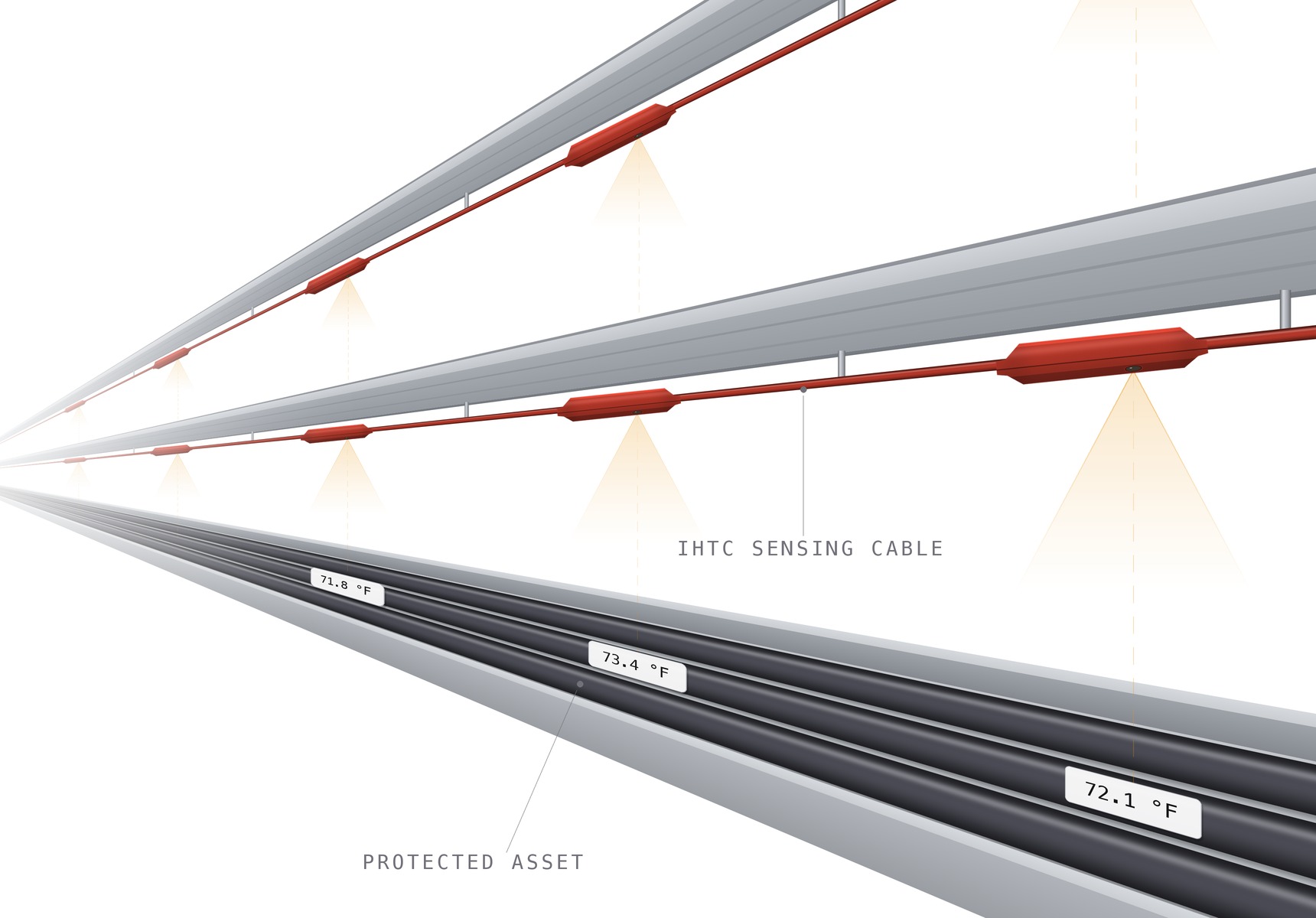
A heat detector responds to the air around it, so heat has to reach the device before anything registers. IHTC reads the surfaces where problems actually start. Every sensing section measures two things at once: the ambient environment, and the surface temperature of the asset itself — the battery rack, the bearing line, the busway. Continuously, every few seconds, along up to 6,560 ft (2,000 m).
Capabilities
Documentation
Continuous monitoring produces documentation, and documentation is what loss-prevention conversations run on. Every IHTC deployment generates three artifacts for the insurer:
The continuous temperature record of every monitored run.
| Sections | 24 |
| Peak | 122 °F / 50 °C |
| Location | Sec. 137 · 16 ft |
| Total alerts | 3 |
Trends, events, and a hot-spot map.
| 14:22 | Sec 137 · rise watch |
| 14:31 | Walk-down started |
| 14:44 | Loose termination found |
| 15:10 | Cleared · work order 4412 |
IHTC records what was flagged, when and where.
IHTC provides the monitoring record. Underwriting terms remain at your insurer's discretion.
Applications
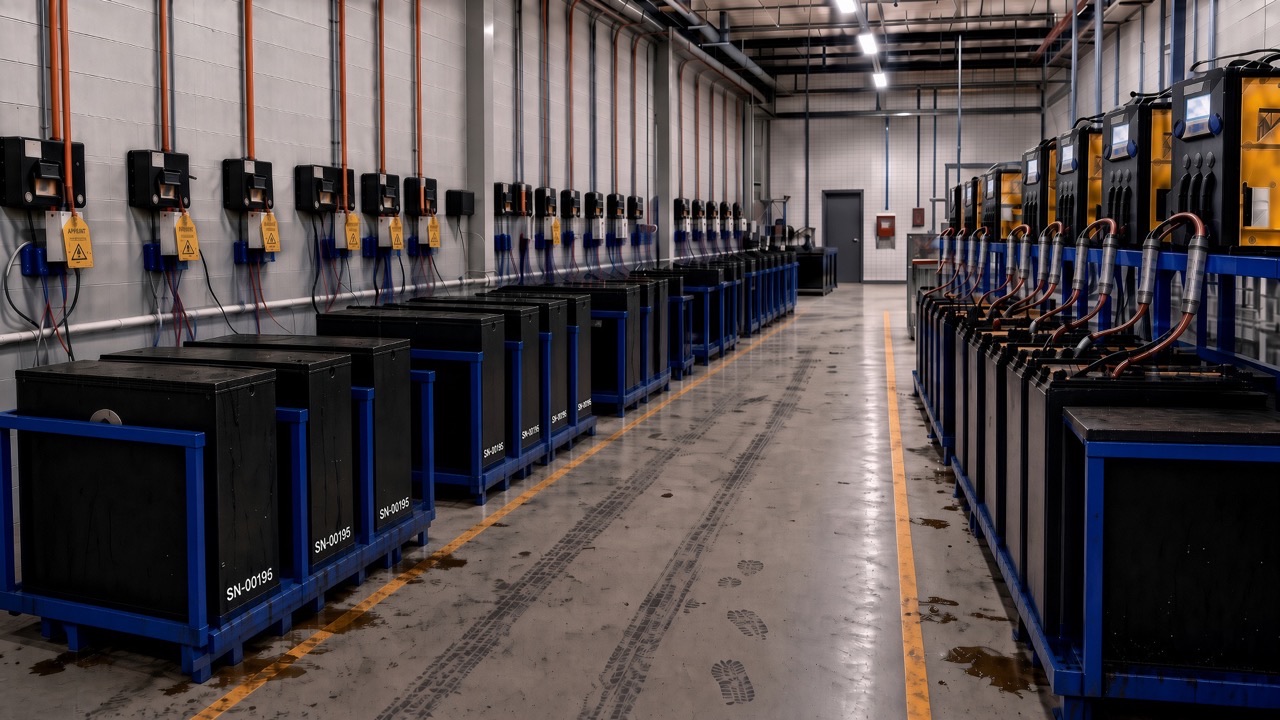
Racks, e-mobility rooms, forklift and tool charging, EV-charging zones in parking garages.
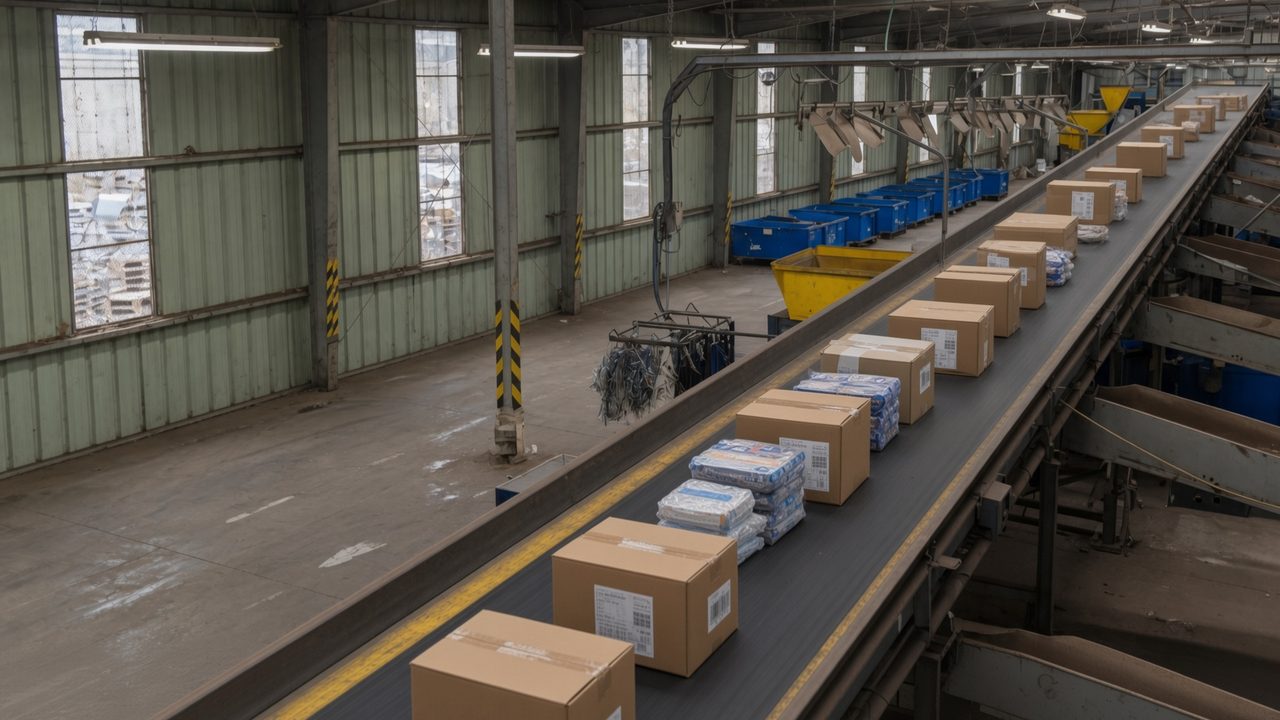
Belt lines and bearing runs, waste & recycling facilities, cold-storage warehouses.
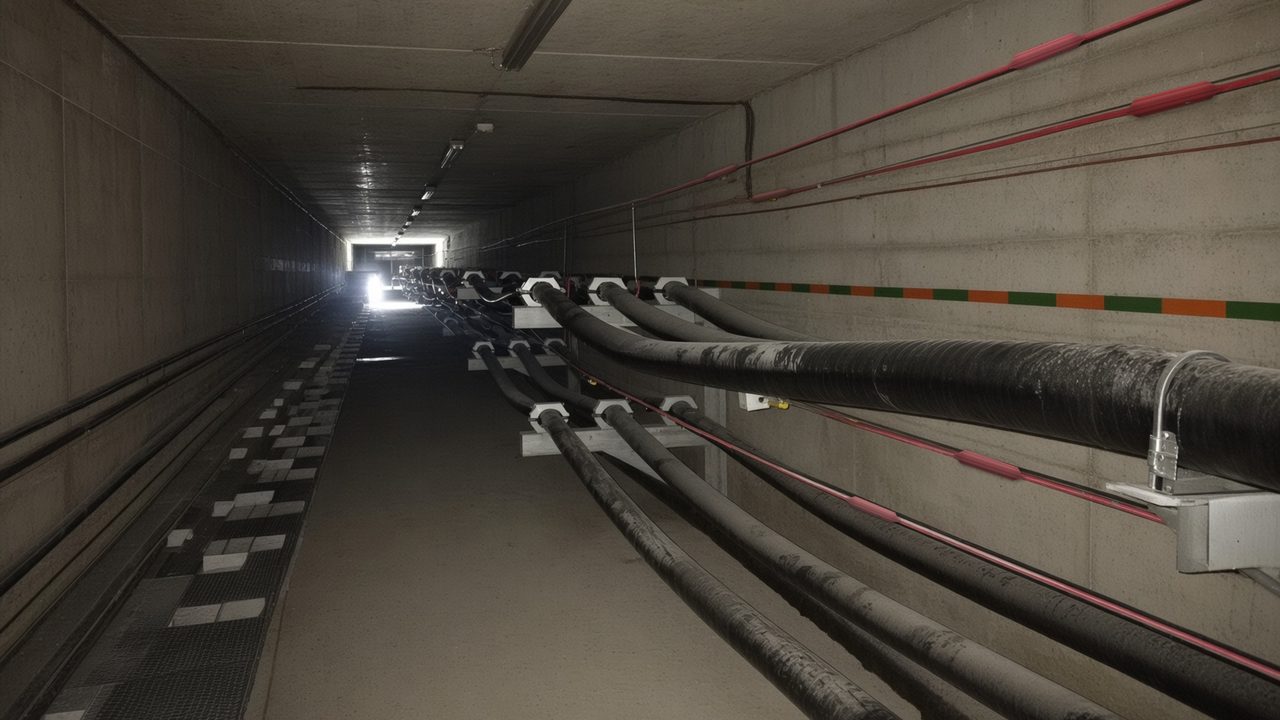
Cable trays, busways, electrical rooms, termination fields.
The Evaluation Kit is a fixed-fee pilot on one application: hardware, commissioning, tuned alert thresholds, temporary monitoring for the pilot period, and an insurer-ready thermal report. The full fee credits toward a deployment, and you keep your data.